
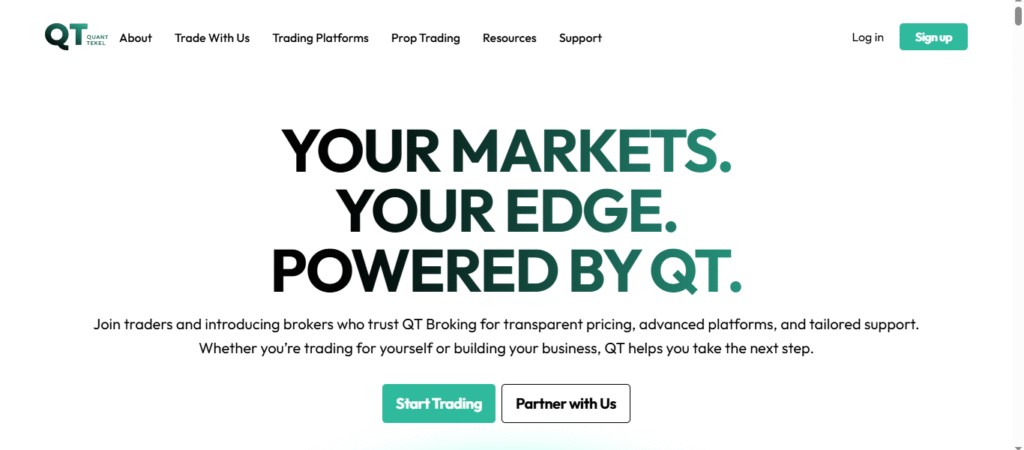
The digital trading landscape is fraught with both legitimate opportunities and predatory schemes designed to fleece unsuspecting investors. Our investigative team has turned its attention to Quant Tekel, a platform that has rapidly accumulated a troubling number of red flags, user complaints, and regulatory warnings. This article serves as an urgent public warning, meticulously detailing the concerning patterns and potential scam tactics employed by Quant Tekel. We urge anyone considering or currently engaged with this platform to read this critical assessment before further jeopardizing their financial well-being. Our objective is to arm you with the facts, expose the truth, and help protect you from potential financial misconduct.
Regulatory Red Flags and Compliance Failures
One of the most immediate and glaring concerns surrounding Quant Tekel is its alarming lack of credible regulatory oversight. In the highly regulated world of financial trading, legitimate brokers operate under strict licenses issued by reputable bodies such as the Financial Conduct Authority (FCA) in the UK, the Australian Securities and Investments Commission (ASIC), or the Cyprus Securities and Exchange Commission (CySEC) in Europe. The absence of such robust regulation is not merely a technicality; it is a fundamental flaw that leaves investors completely exposed to risk with no recourse.
Lack of Proper Licensing: A Fundamental Flaw
Our investigation found no evidence that Quant Tekel holds a valid operating license from any major, recognized financial authority in jurisdictions where it purports to offer services. This means that they are not legally permitted to solicit clients or conduct trading activities in these regions. Unregulated entities do not adhere to capital adequacy requirements, client fund segregation rules, or dispute resolution mechanisms designed to protect investors. This lack of compliance is a massive red flag, indicating that funds deposited with Quant Tekel are likely not protected by any investor compensation schemes. Numerous financial watchdogs globally maintain warning lists for unlicensed firms. A quick check reveals that Quant Tekel has either been explicitly flagged or operates in a manner consistent with other entities on these lists, designed to evade regulatory scrutiny.
- No Tier-1 Regulator: Absence of licenses from bodies like FCA, ASIC, CySEC, BaFin, or FINRA.
- Offshore Registration: Often registered in obscure offshore jurisdictions with lax financial regulations, making it difficult to pursue legal action.
- Jurisdictional Warnings: Potential for specific warnings issued by national regulators against Quant Tekel for operating without authorization.
The implications of dealing with an unregulated broker like Quant Tekel are dire. Without regulatory oversight, there is no independent body to ensure fair trading practices, transparent pricing, or the security of client funds. This environment is ripe for manipulation and outright fraud, turning what might appear as a trading opportunity into a high-risk gamble where the odds are stacked heavily against the investor.
Mounting Quant Tekel Complaints: A Deep Dive into User Experiences
The internet is a powerful forum for collective experience, and a pattern of highly negative user reviews and complaints paints a grim picture for Quant Tekel. Across various independent review platforms, consumer protection forums, and social media channels, a consistent narrative of dissatisfaction, frustration, and alleged deception emerges. These complaints are not isolated incidents but rather indicate a systemic problem within the platform’s operations.
Aggressive Sales Tactics Reported by Quant Tekel Victims
Many users report being targeted by Quant Tekel through unsolicited calls, emails, or social media messages, often from individuals claiming to be “senior account managers” or “financial advisors.” These initial contacts frequently involve high-pressure sales tactics, promising unrealistic returns and guaranteed profits with minimal risk. Victims describe being coaxed into making initial small deposits, often seeing immediate, albeit fabricated, positive results on their trading accounts. This tactic is a classic “bait and switch,” designed to build false confidence and encourage larger investments.
- Unsolicited Contact: Cold calls and emails pushing investment opportunities.
- Guaranteed Returns: Promises of high, risk-free profits, a hallmark of investment scams.
- Pressure to Deposit More: Persistent demands for additional funds, often citing “missed opportunities” or “larger profit potentials.”
- Emotional Manipulation: Exploiting fear of missing out (FOMO) and financial aspirations.
These aggressive sales strategies often bypass the due diligence process that legitimate financial advisors would follow. Instead of assessing a client’s risk tolerance and financial goals, Quant Tekel representatives appear to prioritize maximizing deposits, regardless of the investor’s suitability or understanding of the purported trading activities.
Fabricated Performance and Account Manipulation
A significant portion of the complaints against Quant Tekel revolves around the apparent manipulation of trading accounts. Users report seeing impressive profits on their dashboards, often attributed to the “expert guidance” of their assigned account managers. However, these profits are often illusory. When users attempt to withdraw these supposed gains, the reality of the situation becomes starkly clear. The trading platform itself, which is often proprietary and lacks transparency, is suspected of displaying fictitious figures. This creates a false sense of security and success, compelling investors to pour more capital into the scheme. This is a common tactic used by fraudulent brokers to keep funds flowing in. For more information on how to identify these schemes, consider reading our guide on [How to Spot a Trading Scam].
Deceptive Marketing and Unrealistic Promises by Quant Tekel
The marketing materials and claims associated with Quant Tekel are riddled with characteristics commonly found in investment scams. They leverage sophisticated-looking websites, impressive but vague jargon, and often feature testimonials that appear too good to be true. The core of their deception lies in painting a picture of effortless wealth generation and professional trading expertise that simply doesn’t stand up to scrutiny.
Unsubstantiated Claims of Advanced Technology and Expert Traders
Quant Tekel frequently boasts about its “cutting-edge trading technology,” “proprietary algorithms,” and a team of “world-class financial experts” who manage client funds. Yet, detailed information or verifiable credentials for these claims are consistently absent. There’s no transparent track record, no independent audits of their “technology,” and no public profiles for their alleged experts. This lack of verifiable information is a critical indicator that these are marketing fabrications designed to lend an air of legitimacy to an otherwise opaque operation.
- Vague Technological Claims: Use of buzzwords like “AI-driven,” “machine learning,” “high-frequency trading” without specific, verifiable details.
- Anonymous Experts: No publicly identifiable, reputable financial professionals associated with the platform.
- Lack of Performance Audits: No independent verification of their claimed trading results or platform efficiency.
Legitimate financial services providers are transparent about their technology, their team, and their performance, often providing detailed whitepapers, case studies, and regulatory disclosures. The secrecy surrounding Quant Tekel‘s operational claims should be a major deterrent for any potential investor.
The Alarming Pattern of Quant Tekel Withdrawal Issues
Perhaps the most damning evidence against Quant Tekel comes from the widespread and consistent reports of severe withdrawal problems. For any legitimate financial service, the ability to access one’s funds promptly and without undue hindrance is a fundamental right and expectation. With Quant Tekel, this expectation appears to be consistently unmet, forming a central pillar of the overall scam allegations.
Unresponsive Support and Delayed Payouts
Once an investor attempts to withdraw their funds – whether initial capital or supposed profits – the communication channels with Quant Tekel often go silent or become evasive. Users report a barrage of excuses for delayed payouts, ranging from “technical issues” and “compliance checks” to requests for additional, often arbitrary, documentation. These requests are frequently designed to prolong the process, frustrate the investor, and eventually lead to the abandonment of the withdrawal attempt.
- Excuses for Delays: Technical glitches, bank holidays, “security protocols.”
- Demands for More Fees: Requests for “tax,” “insurance,” or “anti-money laundering” fees before withdrawals can be processed. This is a common tactic to extract even more money from victims.
- Account Freezing: Accounts are sometimes inexplicably frozen or closed once a withdrawal request is initiated.
- Complete Communication Blackout: Account managers who were once highly responsive suddenly become unreachable.
These tactics are classic signs of a recovery scam, where victims are asked to pay additional fees to “release” their funds, only for those funds to never materialize. It’s crucial to understand that legitimate brokers do not demand additional fees for withdrawals beyond standard transaction costs, which are clearly outlined.
The “Tax” or “Commission” Trap
A particularly insidious tactic reported by Quant Tekel users involves the demand for an upfront “tax” or “commission” payment before any withdrawal can be processed. Victims are told that their profits are so significant that they owe a substantial sum to a fictional tax authority or to Quant Tekel itself. This is purely a ploy to extract more money. These “taxes” are never legitimate and are simply absorbed by the fraudsters. If you encounter such a request, it is almost certain you are dealing with a scam. Never pay additional fees to withdraw your own money from a trading platform.
How Quant Tekel Operates: The Modus Operandi of a Suspected Scam
Understanding the typical lifecycle of an online trading scam can help potential victims recognize the signs early. Quant Tekel appears to follow a well-trodden path used by numerous fraudulent entities.
- Initial Contact: Unsolicited outreach via phone, email, or social media, often promising easy wealth.
- Building Trust: Assignment of a “personal account manager” who provides seemingly expert advice and encourages small initial investments.
- Fictitious Profits: Display of impressive, but fake, profits on a proprietary trading platform to encourage larger deposits.
- Pressure to Invest More: Constant pressure to add more funds, often with urgent warnings about “missing out.”
- Withdrawal Attempts: When the investor tries to withdraw funds, the problems begin.
- Excuses and Delays: A series of excuses, technical issues, and demands for further “fees” or “taxes.”
- Communication Breakdown: Eventually, the “account manager” disappears, and all attempts to contact Quant Tekel fail.
- Disappearance: The platform may eventually vanish, or victims are simply ignored.
This systematic approach is designed to extract maximum funds from victims before they realize the true nature of the operation.
Protecting Yourself: What to Do If You’ve Engaged with Quant Tekel
If you suspect you have been scammed by Quant Tekel, or any other similar platform, immediate action is crucial. While full recovery is not guaranteed, taking prompt steps can improve your chances.
- Cease All Communication: Stop engaging with Quant Tekel representatives immediately. Do not send any more money, regardless of the promises or threats.
- Gather Evidence: Collect all correspondence, transaction records, screenshots of your account, and any other relevant documentation. This evidence will be vital for any future reporting or legal action.
- Contact Your Bank/Payment Provider: If you deposited funds via bank transfer or credit card, contact your bank or card provider immediately to explain the situation. They may be able to initiate a chargeback, especially if the transaction is recent.
- Report to Authorities:
- Financial Regulators: Report Quant Tekel to the financial regulatory body in your country (e.g., FCA, ASIC, CFTC). They maintain warning lists and investigate unlicensed activities.
- Police/Law Enforcement: File a police report. Financial fraud is a crime, and your report contributes to broader investigations.
- Consumer Protection Agencies: Contact your local consumer protection agency.
- Beware of Recovery Scams: Be extremely wary of individuals or firms claiming they can “recover” your lost funds for an upfront fee. These are almost always secondary scams targeting victims of initial fraud. Legitimate recovery services typically work on a contingency basis or only charge fees upon successful recovery.
- Seek Legal Advice: Consider consulting with a lawyer specializing in financial fraud. They can advise you on potential legal avenues, though this can be costly and challenging with offshore entities.
Understanding broker regulation is key to avoiding these pitfalls in the first place. Learn more about [Understanding Broker Regulation] to make informed choices. If you’re looking for guidance on what steps to take after falling victim, our article on [Steps to Recover Funds from a Scam] provides a detailed roadmap.
The Broader Implications: Quant Tekel in the Context of Online Trading Scams
The case of Quant Tekel is not an isolated incident but rather a symptom of a pervasive problem in the online financial world. Fraudulent brokers and investment scams are a multi-billion-dollar industry, constantly evolving their tactics to evade detection and exploit new victims. These schemes thrive on the promise of quick wealth, leveraging sophisticated websites and aggressive marketing to appear legitimate.
The proliferation of such platforms highlights the critical need for investor education and vigilance. Before engaging with any online trading platform, rigorous due diligence is paramount. Always verify regulatory status, check independent reviews, and be skeptical of any offer that seems too good to be true. The financial landscape demands caution, and platforms like Quant Tekel serve as a stark reminder of the dangers that lurk for the unprepared investor.
Conclusion: A Resounding Warning Against Quant Tekel
Our comprehensive investigation into Quant Tekel reveals a disturbing pattern of regulatory non-compliance, widespread user complaints, deceptive marketing, and severe withdrawal issues. The evidence strongly suggests that Quant Tekel operates as an unlicensed and potentially fraudulent entity, designed to solicit funds under false pretenses and prevent their withdrawal.
We issue a definitive and urgent warning: Do not invest with Quant Tekel. If you have already deposited funds, prioritize stopping any further payments and taking immediate action to report the platform to relevant authorities. Your financial safety is paramount, and engaging with unregulated entities like Quant Tekel puts your capital at extreme risk. Protect yourself, share this warning, and empower others to avoid falling victim to such schemes.
Written by a consumer advocacy journalist specializing in financial fraud investigation.
External Links Reference Table
| Anchor Text | URL |
|---|---|
| FCA Warning List | https://www.fca.org.uk/data/warnings-list |
| ASIC Unlicensed Broker Warnings | https://asic.gov.au/about-asic/news-centre/news-releases/ |
| Reuters: EU Seeks to Tackle Fraud | https://www.reuters.com/markets/europe/eu-seeks-tackle-fraud-online-trading-platforms-2023-09-12/ |